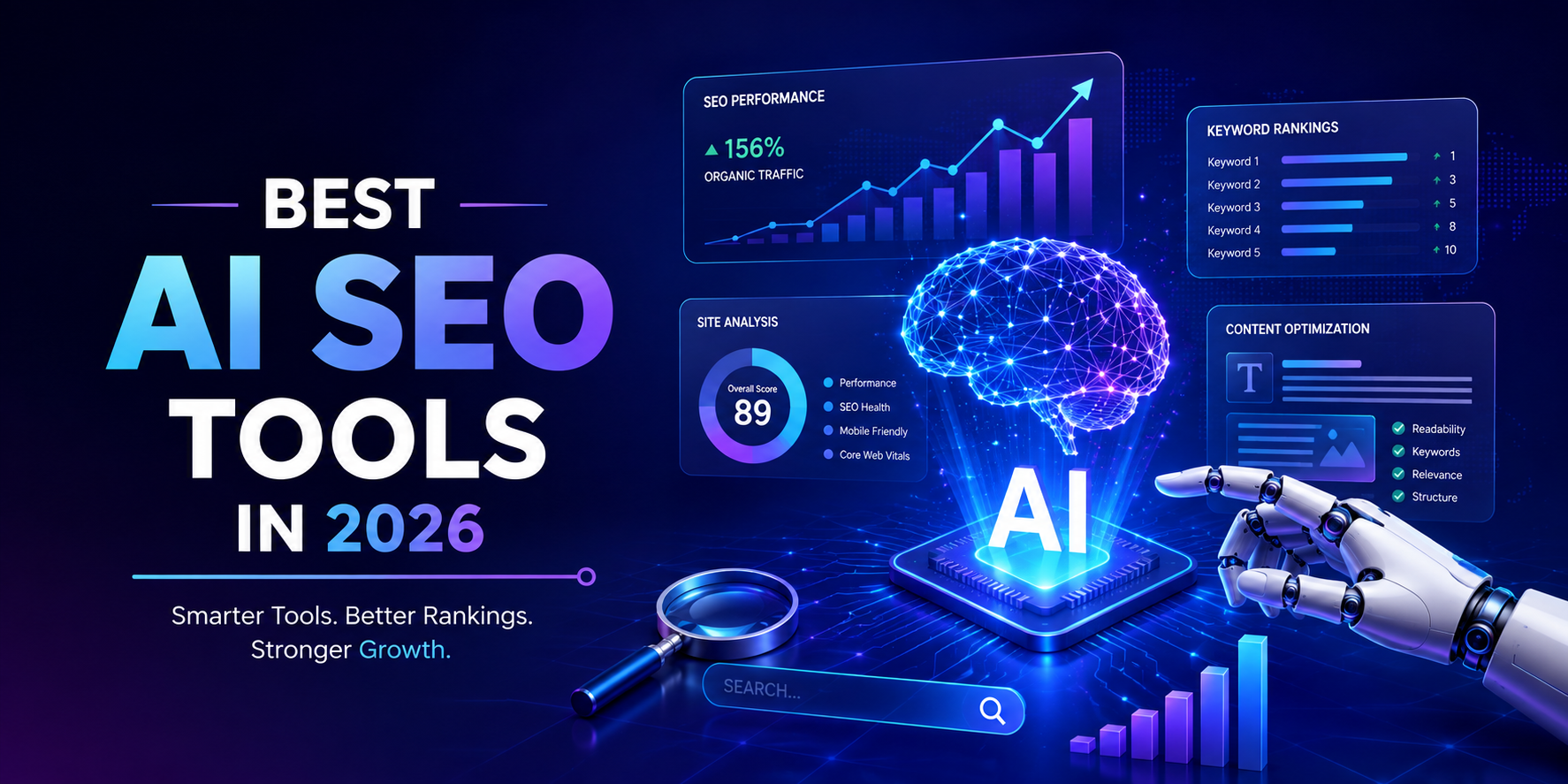
The Best AI SEO tools in 2026 include Semrush One, Surfer SEO, Frase, Alli AI, Screaming Frog, AlsoAsked, Outranking, and Sight AI each built for a different part of the workflow, from keyword research to AI search visibility tracking. The SEO software market has grown fast enough that picking the right tool now feels harder than doing the actual SEO work.
Every platform claims to be AI-powered, but the real difference between genuinely useful AI SEO software and the rest comes down to whether it saves real time through automation, better data, or AI visibility tracking or just adds another dashboard to check.
This guide breaks down the best AI SEO software available right now, organized by what each tool actually does well keyword research, content optimization, technical SEO automation, and the newer category of AI visibility tracking.
We’ve also flagged the genuinely useful free AI tools for SEO optimization throughout, since not every business needs a paid platform to get started several entries on this list are free SEO optimization tools or free website audit tools that punch well above their price tag.
Whether you are a solo blogger in the US comparing your first paid tool or a UK agency scaling SEO automation tools across client accounts, this SEO software comparison covers today’s leading AI powered SEO platforms and is built around real use cases rather than vendor marketing claims.
What Makes a Tool AI SEO Software in 2026
Not every tool with AI in its marketing copy deserves the label. Genuine AI SEO software in 2026 typically does at least one of the following automates a task that used to require manual research (like generating a content brief from top ranking competitors), uses machine learning to surface patterns a human would miss in raw data, or tracks how a brand is being cited inside AI generated answers on platforms like ChatGPT, Perplexity, and Google’s AI Overviews.
That last category is relatively new, and it’s quickly becoming a dividing line in the market. Tools built only for traditional SERP tracking are starting to look incomplete next to platforms that also monitor AI search visibility, since a meaningful share of searches now get answered without a single click to any website.
The Best AI SEO Tools in 2026
1. Semrush One-Best All in One AI SEO Software
Semrush One bundles the full traditional SEO toolkit with an AI Visibility Toolkit inside one platform keyword research, backlink intelligence, competitor analysis, content optimization, technical audits, and AI prompt tracking all live in the same dashboard.
For teams that want one subscription instead of stitching together four separate tools, this is generally considered the strongest overall AI SEO software option in 2026.
What sets it apart from older all in one platforms is the ability to trace an AI citation back to the actual web signals behind it rather than just confirming that ChatGPT mentioned a competitor more often, it helps identify which specific content gap is driving that difference, so the fix is actionable rather than just informational.
Real world example: A marketing manager at a mid sized software company in Chicago used Semrush One to compare her brand’s share of voice against a direct competitor across both traditional search and AI generated answers, discovering her company was well cited for reporting features queries but almost invisible for integration ecosystem questions a gap she wouldn’t have spotted using a traditional SERP only tool.
2. Surfer SEO – Best for Content Optimization
Surfer SEO focuses specifically on making individual pieces of content rank better by analyzing what’s already performing well for a target keyword and scoring your draft against it in real time. It’s widely considered the strongest specialized tool for on-page content optimization, even among teams that use a different platform for keyword research.
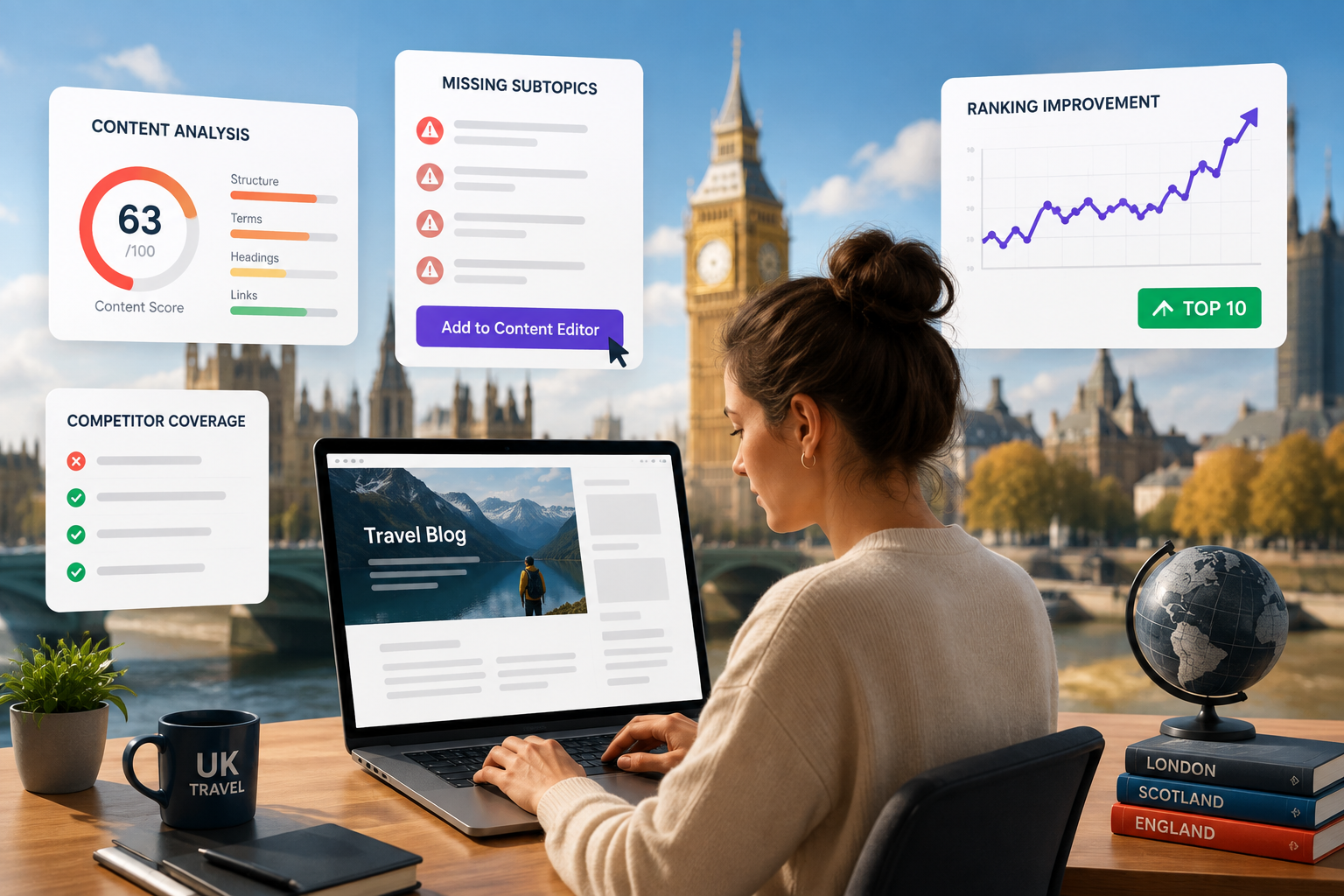
Real world example: A content writer for a UK travel company ran an existing, underperforming blog post through Surfer SEO and found it was missing several related subtopics that competing pages covered after adding three of the suggested sections, the post’s ranking improved within a few weeks without any other changes to the page.
3. Frase-Best Budget AI SEO Software
Frase automates the research stage of content creation, analyzing what’s currently ranking for a topic and generating a data driven content brief in minutes rather than the hours it typically takes to research manually.it’s one of the more accessible entries in this category, with a free version also available.
Real world example: A solo blogger in Austin who previously spent close to an hour building each content brief by hand cut that down to roughly ten minutes using Frase, freeing up enough time to publish an extra post most weeks without changing her overall workload.
4. Alli AI-Best for Technical SEO Automation
Alli AI focuses on automating technical SEO tasks that would otherwise require developer resources schema markup, site speed fixes, and on-page optimizations can be applied directly through the platform rather than filed as a ticket and waiting on a dev team’s availability.
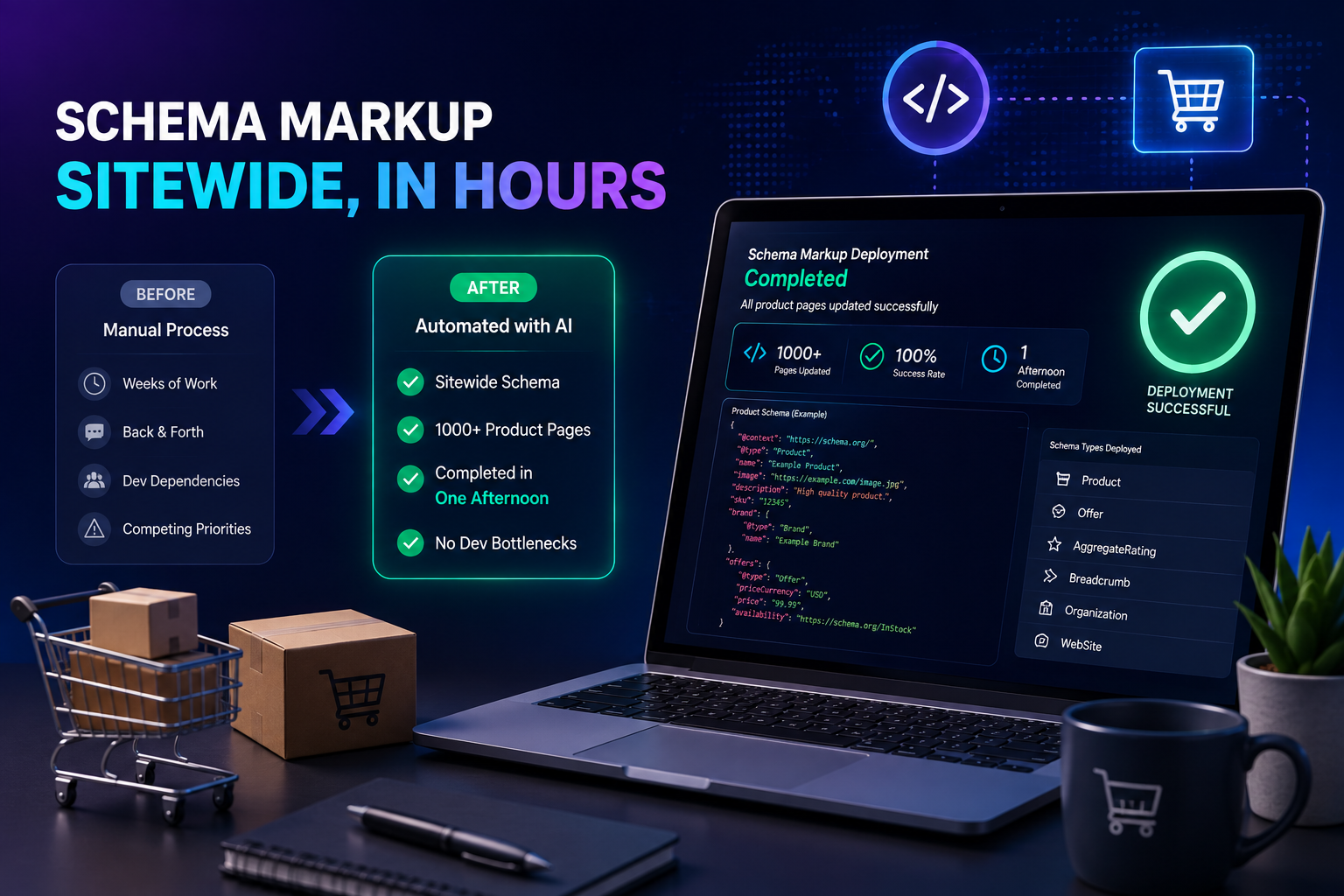
Real world example: An e-commerce site with over 1,000 product pages used Alli AI to roll out missing schema markup sitewide in a single afternoon, a change that would previously have required weeks of back and forth with their development team given competing priorities.
5. Screaming Frog-Best Free Technical Crawler With AI Integration
Screaming Frog’s SEO Spider remains one of the most trusted technical SEO crawlers, and its recent updates now integrate directly with AI models like ChatGPT and Google Gemini, allowing users to automate tasks like generating missing image alt text using natural language prompts instead of manual entry.
The free version covers crawls of up to 500 URLs, making it genuinely usable for smaller sites at no cost.
Real world example: An in house SEO specialist at a UK retailer used Screaming Frog’s AI integration to auto generate alt text for over 300 product images in one crawl, a task that would have taken days to complete manually across that many individual product pages.
6. AlsoAsked -Best for AI Search Question Mapping
As AI search systems increasingly break one big question into several smaller sub queries a pattern often called query fan out AlsoAsked has become a practical way to see that process in advance.
It maps related questions people actually search, which is useful for planning content briefs, FAQ sections, and topic clusters that mirror how both humans and AI systems explore a topic.
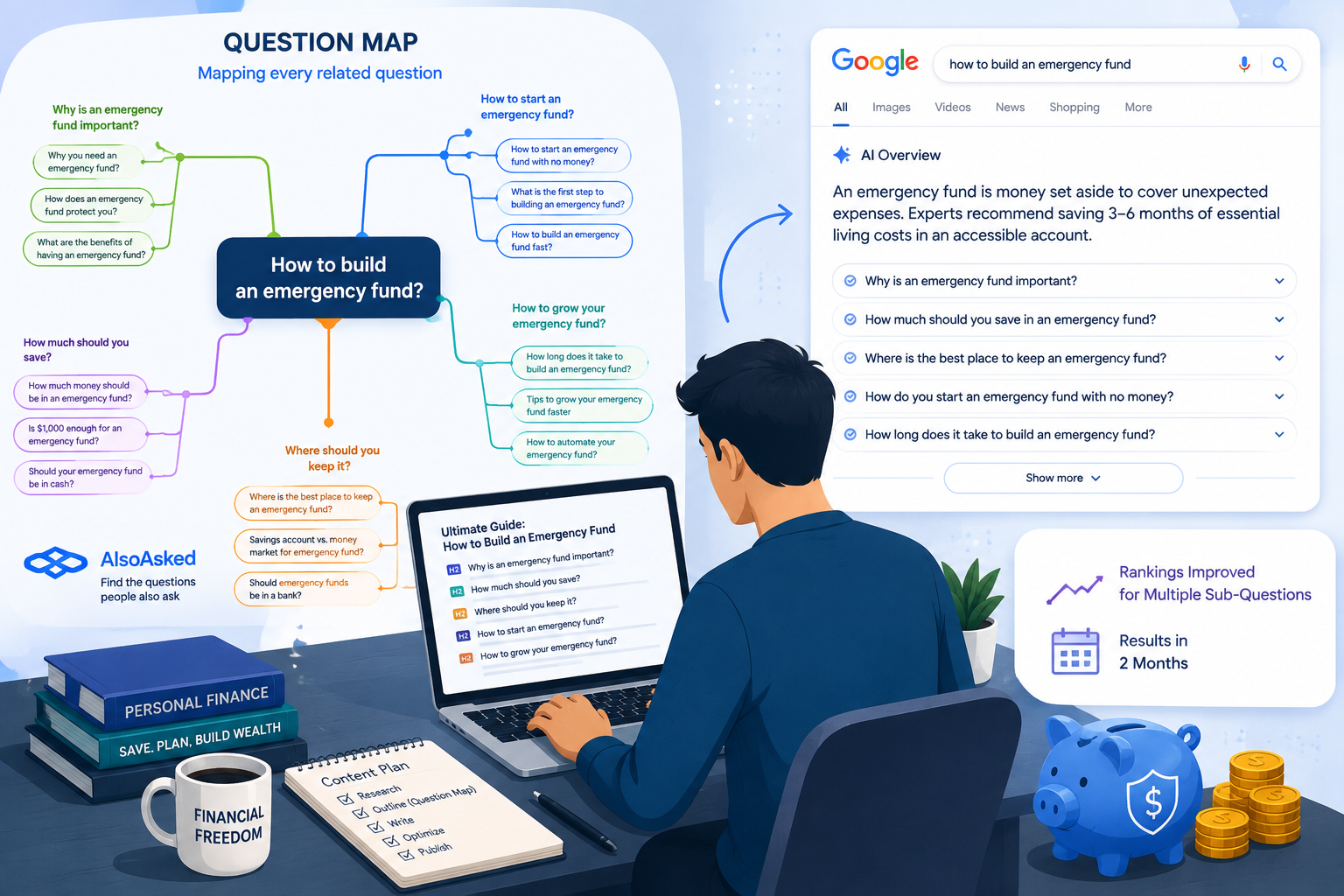
Real world example: A personal finance blog used AlsoAsked to map every related question around “how to build an emergency fund” before writing a single guide, structuring the article’s headers directly around that question map the post began appearing in Google’s AI Overview for several of those exact sub questions within two months.
7. Outranking -Best AI Writing Assistant for SEO
Outranking is built specifically to help automate SEO content optimization during the writing process itself, analyzing top ranking content for a target keyword and guiding the writer toward a stronger structure as they draft, rather than only scoring a finished piece after the fact.
Real world example: A content team at a healthtech startup used Outranking to draft and optimize a batch of ten articles in a single sprint, cutting the average time from outline to publish ready draft by roughly a third compared to their previous manual research and write process.
8. Sight AI-Best for AI Visibility Tracking and Auto Publishing
Sight AI closes a gap most traditional SEO tools still ignore understanding how AI models mention a brand across ChatGPT, Claude, and Perplexity, complete with sentiment analysis, and then automating the publishing loop by pushing finished content directly to a CMS and triggering faster indexing through IndexNow.
Real world example: A B2B SaaS company noticed through Sight AI that a competitor was being cited far more often than they were for a specific feature comparison query, prompting them to publish a dedicated comparison page after publishing and indexing it through the platform’s automated pipeline, their own citation rate for that query improved within several weeks.
Free AI Tools for SEO Optimization and Website Audits
Not every business is ready for a $99 a month all in one platform, and the good news is several genuinely useful free AI tools for SEO optimization exist alongside the paid options above.
If you’re specifically looking for SEO optimization tools free of cost, or the best free website audit tools to catch technical issues before they hurt rankings, three options from this list are worth starting with before spending anything.
Screaming Frog’s free crawler remains one of the best free website audit tools available, covering crawls of up to 500 URLs at no cost enough for most small business sites to catch broken links, missing tags, and redirect loops without a subscription.
Its AI integration for auto-generating alt text is available even on the free tier for smaller crawls.
Google Search Console , while not AI branded, remains the single most reliable free source of real indexing and ranking data, and pairs naturally with any of the AI powered SEO platforms above always worth cross-checking a paid tool’s numbers against it.
AlsoAsked’s free tier gives genuine access to क्वेश्चन mapping data without a credit card, making it one of the more practical free AI tools for SEO optimization specifically aimed at AI search visibility rather than traditional rankings alone.
Real-world example: A newly launched bakery website in Bristol used only free tools for its first six months Screaming Frog’s free crawler for technical audits, Google Search Console for ranking data, and AlsoAsked for content questions and reached page one for several local search terms before the owner ever paid for a dedicated SEO optimization tool.
How to Choose the Right SEO Automation Tools for Your Business
With this many strong options, the more useful question usually isn’t “which tool is best” in the abstract, but “which gap in my current workflow actually costs me the most time.A few practical starting points:
- If you’re managing everything manually across spreadsheets and multiple free tools, an all in one platform like Semrush One usually pays for itself in time saved alone.
- If your bottleneck is specifically weak performing content that never quite ranks, a content optimization tool like Surfer SEO or Outranking addresses that directly.
- If technical issues (schema, site speed, broken links) are piling up faster than your dev team can fix them, Alli AI or Screaming Frog’s automation features close that gap without adding headcount.
- If you have no visibility into how AI search engines mention your brand at all, that’s now a real blind spot worth addressing with a dedicated AI visibility tool like Sight AI or Semrush One’s AI Visibility Toolkit.
What to Check Before Committing to Any AI SEO Software
With dozens of platforms now marketed as AI SEO software, a short evaluation checklist saves both money and wasted onboarding time:
- Data source transparency: does the tool explain where its search volume or ranking data comes from, or does it treat those numbers as a black box?
- Free trial or free tier: genuinely useful tools generally let you test core functionality before committing to a monthly plan, rather than requiring a long-term contract upfront.
- Actual time saved, not just automation for its own sake: a feature that automates a task you rarely do isn’t worth paying for, regardless of how sophisticated it sounds in a demo.
- AI visibility coverage, if relevant to your business: if your audience is likely to discover you through ChatGPT or Google’s AI Overviews, confirm the tool actually tracks that, rather than only traditional keyword rankings.
Free vs Paid AI SEO Software: What You Actually Need
Not every business needs a $200 a month platform from day one. Google Search Console remains free and covers genuine ranking and indexing data.
Pairing that with one specialized free or low cost tool Screaming Frog’s free crawl tier, or Frase’s entryl evel plan covers a meaningful share of what a solo blogger or small business actually needs early on.
Paid, full featured platforms become more clearly worth the cost once you’re managing multiple sites, need AI visibility tracking specifically, or are producing content at a volume where manual research has become the actual bottleneck rather than writing itself.
How AI SEO Tools Fit Into AI Search Visibility (GEO)
A growing share of search traffic now involves zero click behavior the user gets a complete answer from an AI Overview or a chatbot without visiting any website at all.
This shift is exactly why several of the tools on this list now double as Generative Engine Optimization tools, tracking AI visibility as a core feature rather than an afterthought ranking well in a traditional SERP no longer guarantees your brand appears when someone asks ChatGPT or Google’s AI Mode the same question.
In practice, the tools that help most with this shift tend to focus on a few shared priorities structured data and clear entity naming (so AI systems can more easily identify what a page is actually about), citation ready content built around real statistics and named sources, and question based content structures that mirror how AI systems fan a single query out into several smaller ones.
The best AI SEO software in 2026 increasingly treats these as standard features rather than a separate add on.
Common Mistakes When Adopting AI SEO Software
Buying an All in One Platform Before Knowing Your Actual Bottleneck
It’s easy to be drawn to the tool with the longest feature list, but paying for an all in one platform when your real problem is one specific gap like slow technical fixes often means paying for capacity you won’t use while still needing a specialized tool for the actual issue.
Trusting AI-Generated Data Without Cross-Checking
Even strong AI SEO tools can occasionally misreport a metric or overstate confidence in a recommendation. Cross checking key numbers against Google Search Console before making a major content or technical decision remains good practice, regardless of how sophisticated the tool’s AI claims to be.
Ignoring AI Visibility Until It’s Already a Problem
Many teams still treat AI search citation tracking as optional, only investigating it after noticing a drop in traffic they can’t otherwise explain. Given how much search behavior has already shifted toward AI generated answers, waiting until it becomes a visible problem usually means losing months of avoidable ground to competitors who started tracking it earlier.
Frequently Asked Questions For Best AI SEO Tools in 2026
What is the best AI SEO software for beginners?
For beginners, Frase offers one of the most accessible starting points thanks to its low entry price and free tier, while Screaming Frog’s free crawler covers technical basics at no cost.
Both provide genuine value without requiring a large monthly commitment before you know whether AI assisted SEO fits your workflow.
Are AI SEO tools accurate enough to replace manual SEO work entirely?
No. AI SEO tools are best used to automate research, drafting, and repetitive technical tasks, not to replace human judgment about strategy, brand voice, or which opportunities are actually worth pursuing. The strongest results still come from a human directing these tools with clear goals, not from fully automated decision-making.
What’s the difference between traditional SEO software and AI SEO software?
Traditional SEO software focuses primarily on keyword rankings, backlinks, and technical audits for standard search engine results. AI SEO software includes those same functions but adds automation (AI generated content briefs, automated technical fixes) and, increasingly, tracking of how a brand appears inside AI generated answers on platforms like ChatGPT and Google’s AI Overviews.
Can small businesses benefit from AI SEO software, or is it only useful for agencies?
Small businesses often see the fastest relative time savings from AI SEO tools, since a solo founder or small team has the least spare time for manual research and technical fixes.
Starting with one focused tool that addresses a specific bottleneck, rather than a full agency level platform, is usually the more practical entry point.
Do AI SEO tools help with getting cited in Google’s AI Overviews specifically?
Some do, directly. Tools like Semrush One’s AI Visibility Toolkit and Sight AI specifically track and help improve how often a brand is cited inside AI Overviews and other AI generated answers, which is a distinct metric from traditional keyword ranking and increasingly tracked as its own category.
Is it worth using multiple AI SEO tools at once, or should I pick just one?
Most established SEO teams do use more than one tool, since few platforms excel at every category keyword research, content optimization, technical audits, and AI visibility tracking.
A common approach pairs one all in one platform for core data with a specialized tool for the specific area needing the most improvement, rather than trying to force a single tool to cover everything equally well.
How do I know if my business actually needs AI visibility tracking, or if traditional SEO tools are enough?
If your target audience is likely to research purchases or solutions using ChatGPT, Perplexity, or Google’s AI Mode which is increasingly common across most consumer and B2B categories AI visibility tracking has real value.
Businesses in highly niche, offline driven markets with minimal AI search overlap may still get by with traditional tools alone, at least for now.
Conclusion
The best AI SEO tools in 2026 aren’t defined by which one has the most features they’re defined by which one closes the specific gap costing your team the most time right now.
Semrush One remains the strongest all in one choice for teams that want everything in one platform, Surfer SEO and Outranking lead for content optimization, Alli AI and Screaming Frog handle technical automation without needing a developer for every fix, and AlsoAsked and Sight AI address the newer, increasingly unavoidable challenge of AI search visibility.
Start by identifying your actual bottleneck rather than shopping by feature list.
A solo blogger with a technical backlog benefits more from Screaming Frog’s free crawler than from an expensive all-in-one platform, while an agency juggling dozens of client sites likely needs the consolidated view Semrush One provides.
Match the tool to the problem, and the rest of the stack tends to fall into place from there.